
 Online Business Development
 Quality Management
 Environmental Management
 Health & Safety Management
 Information Security Management
 IT Services Management
 Food Safety
 Medical Laboratories
 Design courses
 ICDL
ICDL Cisco
Cisco IT Security
 CompTIA
 Programing
 crafts
 Safety
 Office Management
 Human Resource Management
 Institutional Development
 RedHat
 Public Relations
 Anti - Bribery Management System
 Traffic Safety Management System
 Purchases & Warehouses
 Leadership Development
 ERP System
 Accounting
 International storing and distribution practice
 Blacksmithing
 carpentry
 Building and Industrial Electrical
 Fashion Stylist and Model Making
 Aluminum carpentry
 Automobile Diagnostic
 Modern Male’s Hairdressing
 Modern Pastry
 International Cuisine
 Caregiver
 Computer programming
 graphic design
 Bodybuilding, Fitness Hit Training
 Accounting and Management
 Plumbing and Air conditioning
 Mobile phone repair and maintenance
 Babysitter
 Office Computer Skills
 Modern Butchery
 Welding
-small.png) Plumping
PlumpingMEAL DPro: Monitoring, Evaluation, Accountability and LearningHuman Resource Management / MEAL DPro: Monitoring, Evaluation, Accountability and Learning
| Start : June 02-2021 |
| End : June 05-2021 |
| Trainer : Eng.Saad Hamad |
| Course Fee : 750.00$ |
| No. Of Places : 5 Of 12 |
| Location : Online |
This eLearning Suite builds the capacity of development and humanitarian professionals in the area of Monitoring, Evaluation, Accountability and Learning (MEAL). Learners will increase their understanding of MEAL, test their new knowledge through case-based scenarios, and enhance their ability to track the progress and impact of their projects.
who should attend?
- Non-Meal Specialists who would like to establish a solid foundation in internationally accepted MEAL concepts, terminology, tools and techniques;
- MEAL Specialists who would like an opportunity to solidify their basic knowledge of MEAL and establish a common language and culture of MEAL processes, tool and skills among their teams and project stakeholders.
Learner qualifications include 1-5 years of experience in the development and humanitarian sector, although some learners will have more experience.
objective
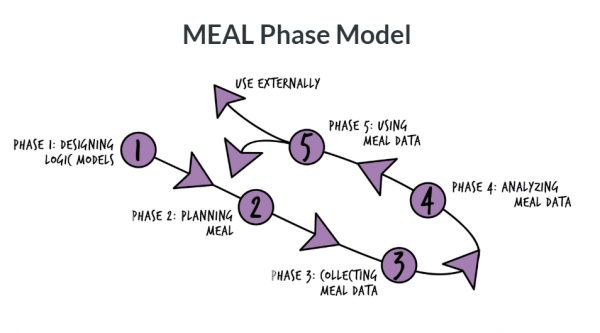
- Design logic models that later become the foundations of MEAL in projects. These tools include the Theory of Change, Results Frameworks, and Logical Frameworks (logframes);
- Plan for MEAL using practical tools that include Performance Management Plans, Indicator Performance Tracking Tables, Summary Evaluation Tables, Evaluation Terms of Reference, Feedback-and-Response Mechanisms, Learning Plans and Communications Plans;
- Collect MEAL data by using well-designed qualitative and quantitative data collection tools, appropriate sampling methods, and recommended data management practices;
- Analyze MEAL data by using quantitative (descriptive and inferential) statistics and qualitative methods to analyze, interpret and visualize MEAL data;
- Use MEAL data to inform project decisions, communicate with stakeholders and practice adaptive management.
content
- Design logic models that later become the foundations of MEAL in projects. These tools include the Theory of Change, Results Frameworks, and Logical Frameworks (logframes).
- Plan for MEAL using practical tools that include Performance Management Plans, Indicator Performance Tracking Tables, Summary Evaluation Tables, Evaluation Terms of Reference, Feedback-and-Response Mechanisms, Learning Plans and Communication Plans.
- Collect MEAL data by using well-designed qualitative and quantitative data collection tools, appropriate sampling methods, and recommended data management practices;
- Analyze MEAL data to inform project decision, communicate with stakeholders and practice adaptive management.